Choosing the China best vape device requires more than comparing appearance, flavor, or battery size. A device that feels warm after several puffs may be working normally. However, excessive heat, a burning smell, flashing warnings, or a hot charging port demands immediate attention. Understanding what causes vape device overheating helps users recognize danger before a small temperature change becomes a serious failure.
Battery-safety expert and reviewer Christopher “Mooch” Long has repeatedly emphasized, “Never use a battery with a damaged wrap.” This warning matters because a torn battery wrapper can allow contact with metal parts inside the device. Loose connections, unsuitable chargers, blocked airflow, extended activation, and damaged coils may also increase heat. The sensation is easy to imagine: a device becomes uncomfortable in your palm, while the metal mouthpiece grows warmer with every draw.
A reliable guide should separate normal warmth from unsafe overheating. It should also acknowledge uncertainty. Not every heat problem is visible, and product quality can vary between models, batches, and suppliers. Even experienced users can miss internal damage after a drop. Therefore, this article examines what causes vape device overheating through battery condition, charging behavior, coil resistance, airflow, and manufacturing quality. The goal is practical safety, not exaggerated claims. If a device becomes unusually hot, stop using it, disconnect it from power, and seek qualified technical guidance. Never ignore the smell of burning plastic.
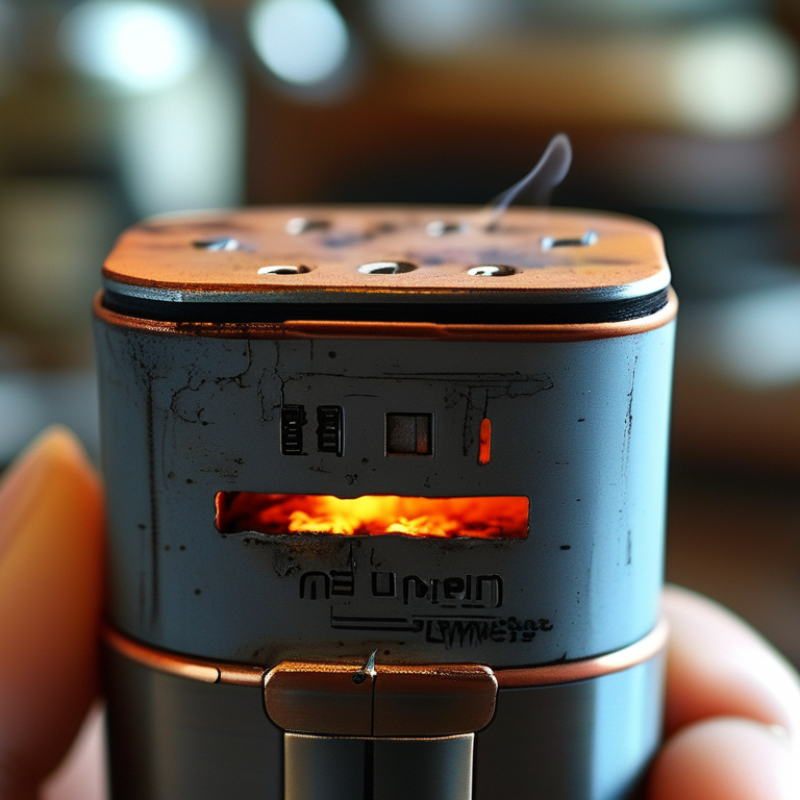
Vape device overheating means the unit becomes hotter than its normal operating range. A slightly warm surface can be normal during use. Hot metal, a burning smell, or sudden performance changes are not. Heat may build around the coil, battery, or charging port. The device needs immediate attention.
Several conditions can create excessive heat. Repeated inhaling gives the coil little time to cool. Restricted airflow can trap heat near the heating chamber. A blocked air path, high power setting, or unsuitable component may worsen the problem. Charging in direct sunlight can also raise the battery temperature. Even a small dent or damaged wrap deserves caution.
Watch for a hot mouthpiece, weak vapor, leaking liquid, or automatic activation. Heat is a warning. Stop using the device and disconnect it from power. Place it on a dry, nonflammable surface away from children and fabrics. Let it cool naturally. Do not put it in water or a freezer. Never continue using a swollen, cracked, or leaking battery.
A practical inspection should include the charger, cable, airflow openings, and battery contacts. Clean, undamaged parts reduce avoidable stress. Still, temperature alone cannot confirm safety. This is where judgment matters. A warm device is not always dangerous, but ignoring repeated heat is a poor decision. If the problem returns after cooling, professional assessment or replacement is the safer choice.
Excessive heat usually begins inside the device, not on its surface. The heating coil converts electrical energy into vapor, but restricted airflow can trap heat around the chamber. A dry wick creates a harsher condition. Without enough liquid, the coil temperature can rise quickly and produce a burnt taste.
The battery is another critical component. Damaged cells, loose contacts, unsuitable chargers, or blocked vents can increase resistance and heat. The charging circuit should control current and stop charging at the correct voltage. Poor connections may create small hot spots near the terminals. They can feel like a warm coin against the palm. A cool casing does not prove safe internal temperatures.
The U.S. Fire Administration recorded 195 electronic-cigarette fire and explosion incidents between 2009 and 2016. Its report identified 133 acute injuries, including 38 severe injuries. These figures show why battery protection deserves serious attention.
Current safety practice also follows principles in IEC 62133-2, which addresses rechargeable battery testing and protection. However, standards cannot correct every user mistake. I would inspect swelling, dents, unusual odors, and rapid heating before continued use. That judgment is imperfect. Still, ignoring small warning signs is worse.
Cleaning contacts, keeping airflow clear, and using the supplied charging equipment can reduce avoidable heat. Temperature monitoring remains useful, but it cannot replace proper component design.
China-made vape devices prevent overheating through layered controls, not one magical component. A temperature sensor monitors the heating chamber several times each second. If readings rise too quickly, the control board reduces power or stops output. Many designs also use timed activation limits. This helps when a button sticks or airflow becomes restricted. In a properly tested device, the exterior should feel warm, not painfully hot. Small detail, but useful.
Manufacturing quality also affects thermal safety. Technicians may inspect battery connections, solder joints, airflow channels, and charging protection circuits. Automatic testing can measure resistance and confirm whether the device responds correctly under changing power demands. Some control systems limit output when the battery voltage becomes unstable. Protective charging features can also stop current flow after a full charge or detect abnormal heat. These safeguards reflect practical engineering, although their performance depends on consistent production standards.
No safety system is perfect. A sensor can drift, a seal can weaken, or blocked airflow can change heating behavior. I would never treat an automatic cutoff as permission to ignore unusual heat, smell, swelling, or repeated shutdowns. Devices also age, and their protection may not perform exactly as it did on the first day. Clear testing records, traceable components, and honest safety instructions remain as important as the circuit board itself.
An overheated vape can create more than an unpleasant warm sensation. A lithium-ion battery may enter thermal runaway, releasing intense heat, smoke, or flames. Users may notice a hot casing, chemical odor, hissing, swelling, or sudden power loss.
The United States Fire Administration recorded 195 fires and explosions involving electronic cigarettes between 2009 and 2016. Its report identified 133 injuries, including 38 severe cases. A peer-reviewed analysis in Tobacco Control estimated 2,035 emergency-department visits linked to vape explosions from 2015 to 2017. Burns to the hands, face, and thighs were frequently reported. Eye injuries can also occur when a device fails near the mouth.
Small details matter. Do not continue using a device that becomes unusually hot. Move away from flammable materials, avoid touching a swollen battery, and seek professional assistance. Never charge damaged equipment or leave it charging unattended. Heat inside a parked vehicle can worsen battery stress.
The evidence has limits. Incident databases may miss minor injuries and unreported household fires. That gap deserves more research. A cool-looking device is not automatically safe. Consistent manufacturing checks, battery protection, and careful user inspection remain essential risk controls.
| Overheating Cause | How It Develops | Typical Warning Signs | Potential Safety Risk | Risk Level | Recommended Prevention or Action |
|---|---|---|---|---|---|
| Chain vaping | Repeated inhalation without enough cooling time can heat the coil, wick, and surrounding components faster than they can dissipate heat. | Hot mouthpiece, harsh or burnt taste, reduced vapor, unusually warm device body. | Burn injuries, damaged coil or wick, and possible release of irritating thermal-decomposition products from overheated e-liquid. | Moderate | Stop using the device and allow it to cool completely. Avoid repeated back-to-back puffs and replace damaged or burnt components according to the device instructions. |
| Insufficient e-liquid or a dry wick | The heating element operates without adequate liquid saturation, causing a dry hit and rapid localized heating. | Burnt flavor, throat irritation, little vapor, darkened wick, or a crackling sound that differs from normal operation. | Burns, throat and airway irritation, and overheating of the coil assembly. | Moderate | Stop vaping immediately. Do not continue operating a device that produces a persistent burnt taste. Check the liquid level and replace the coil or pod if required. |
| Blocked airflow | Obstructed air inlets or a heavily compressed airflow path reduce cooling around the heating element. | Restricted draw, unusually hot vapor, louder-than-usual operation, or heat concentrated near the mouthpiece. | Hot vapor burns, coil damage, and increased stress on the battery and control circuitry. | Moderate | Stop using the device, clear only the external airflow openings as instructed by the manufacturer, and never operate it if airflow remains restricted. |
| Excessive power or incorrect settings | Power that exceeds the compatible range of the coil or pod can generate more heat than the wick and airflow system can manage. | Rapid heat buildup, burnt taste, unusually dense vapor, or a warning message from the device. | Burns, coil failure, overheating of internal components, and accelerated battery stress. | High | Use only the recommended power range and compatible components. Reduce power or stop using the device if abnormal heat continues. |
| Damaged, aged, or incompatible battery | Physical damage, internal defects, aging, or an unsuitable battery can increase electrical resistance, leakage current, or heat generation. | Swollen battery, torn wrapping, dents, corrosion, rapid heating, unusual odor, or inconsistent performance. | Battery venting, fire, explosion, severe burns, and damage to nearby property. | High | Stop using the device immediately. Do not charge, puncture, disassemble, or transport a visibly damaged or swollen battery. Follow local hazardous-battery disposal guidance. |
| Charging fault or unsuitable charger | A damaged cable, incompatible power source, faulty charging circuit, or charging a device with damaged cells can create abnormal heat. | Device becomes very hot while charging, charging takes unusually long, unusual smell, discoloration, or repeated charging interruptions. | Electric shock, battery venting, fire, explosion, and property damage. | High | Unplug the charger if it is safe to do so. Charge only with the specified equipment, on a nonflammable surface, away from bedding and direct heat. Do not charge unattended or overnight. |
| Exposure to high temperatures | Direct sunlight, a hot vehicle, a radiator, or another heat source raises the battery temperature and can reduce its safety margin. | Very warm device before use, softened materials, swollen battery, leakage, or unexpected shutdown. | Battery degradation, leakage, thermal runaway, fire, and explosion in severe cases. | High | Move away from heat only if it can be done safely. Do not leave the device in a parked vehicle or direct sunlight. Allow it to cool naturally; never cool it with water or ice. |
| Liquid leakage into the device | E-liquid can reach electrical contacts or control components, causing poor connections, short circuits, or abnormal operation. | Wet connectors, sticky residue, automatic firing, inconsistent activation, or heat near the battery area. | Skin or eye irritation, electrical malfunction, overheating, and battery failure. | High | Stop using and charging the device. Keep e-liquid away from children and pets, wash exposed skin, and seek medical advice promptly if liquid is swallowed or enters the eyes. |
| Internal short circuit or automatic firing | A component fault, contamination, water exposure, or mechanical damage can cause the device to activate without a normal puff. | Device activates by itself, continuous hissing, rapid heat buildup, or vapor produced without inhalation. | Severe burns, battery venting, fire, and explosion. | High | Stop handling it if it is dangerously hot. Move people away, keep flammable materials clear, and call emergency services if smoke, flames, rupture, or intense odor occurs. |
| Improper storage or contact with metal objects | Loose batteries or exposed battery terminals can short against keys, coins, tools, or other conductive objects. | Battery becomes hot in a pocket or bag, damaged wrapping, sparking, or a sharp chemical odor. | Rapid discharge, burns, battery venting, fire, and explosion. | High | Keep removable batteries in a protective case with terminals covered. Never carry loose batteries with metal objects or use batteries with damaged insulation. |
| Using a device after impact or water exposure | Dropping or wetting the device may damage internal insulation, the battery, sensors, or protection circuitry even when external damage is not obvious. | Cracks, rattling, delayed activation, erratic output, leakage, or unexpected heating. | Short circuit, battery failure, fire, electric shock, and chemical exposure. | High | Do not use or charge the device after significant impact or water exposure. Keep it away from flammable materials and arrange safe inspection or disposal. |
| Normal warmth during operation | Some warmth can occur because electrical energy is converted into heat by the coil and electronics. | Mild, temporary warmth that does not rapidly increase and is not accompanied by odor, smoke, leakage, or malfunction. | Usually limited, but continued temperature increase can indicate an emerging fault. | Low | Monitor the device and stop using it if heat becomes painful, rapid, persistent, or localized near the battery, charging port, or control area. |
When a vape device feels unusually hot, diagnosis should begin with observation, not guesswork. Check whether heat comes from the battery area, charging port, or coil chamber. A hot mouthpiece often indicates restricted airflow, excessive firing, or a saturated coil. Stop using the device immediately. Place it on a cool, nonflammable surface, away from paper and fabric. Never open a warm battery or cool it with water.
The U.S. Fire Administration reviewed 195 reported e-cigarette fire and explosion incidents from 2009 to 2016. Its findings show why battery condition and charging habits deserve careful attention. UL 8139 also evaluates thermal, electrical, and mechanical battery safety. Users should inspect swelling, dents, leaking liquid, damaged insulation, or unusual smells. Any warning sign means replacement by a qualified service provider, not continued testing.
Keep airflow openings clear, avoid pressing the control continuously, and use only the specified charging equipment. Do not charge overnight or in direct sunlight.
I have found that people often blame the coil first. That assumption is sometimes wrong. A blocked air path or loose connection can create heat faster than expected. Check the device when it is cool, record when overheating occurs, and stop using it if the pattern repeats.
: Warning signs include a hot casing, chemical odor, hissing, swelling, smoke, or sudden power loss. Stop using it immediately.
A lithium-ion battery can enter thermal runaway. This may release intense heat, smoke, or flames. Burns can affect the hands, face, thighs, and eyes.
Stop using the device and move away from paper, fabric, and other flammable materials. Place it on a cool, nonflammable surface. Do not touch a swollen battery.
A hot mouthpiece may indicate restricted airflow, excessive firing, or a saturated coil. However, the coil is not always responsible. A blocked air path may generate heat faster.
Check the battery area, charging port, and coil chamber after the device cools. Look for dents, swelling, leaking liquid, damaged insulation, or unusual smells. Do not open a warm battery.
Use only the specified charging equipment. Never charge damaged equipment, overnight, or in direct sunlight. Do not leave the device charging unattended.
Yes. Heat inside a parked vehicle can increase battery stress. Avoid leaving the device in hot vehicles, especially near windows.
Seek qualified assistance when warning signs appear or overheating happens repeatedly. Do not keep testing a swollen, leaking, or damaged device. The exact cause may remain uncertain.
One safety review recorded 195 fires and explosions from 2009 to 2016. It identified 133 injuries, including 38 severe cases. Reported figures may miss minor incidents.
Vape device overheating occurs when the device produces more heat than its internal system can safely release, often causing a hot body, burnt taste, weak vapor, or unexpected shutdown. The main contributors include battery stress, damaged charging components, blocked airflow, excessive power output, prolonged use, and heat buildup in the coil or control circuit. Understanding what causes vape device overheating helps users recognize warning signs before the problem becomes serious.
Many modern China-made vape devices use temperature monitoring, automatic power limits, insulated battery compartments, and protective cutoffs to reduce excessive heat. However, safety also depends on proper use. Users should keep airflow clear, avoid continuous operation, use compatible charging equipment, inspect the device for damage, and store it away from high temperatures. If a device becomes unusually hot, produces an abnormal smell, or behaves unpredictably, stop using it, disconnect it from power, and allow it to cool in a safe location. Regular cleaning and careful inspection can also help prevent overheating.

Luvn Vape