How do we identify meaningful innovation instead of bright packaging and recycled claims? This guide examines what are the latest trends in vape devices through supplier research, product testing, and responsible market analysis. In 2026, credible sourcing may focus on leak-resistant pod systems, safer battery protection, transparent materials, USB-C charging, and designs that reduce unnecessary waste. These features matter when they improve reliability, not merely appearance.
Dr. Colin Mendelsohn, a physician and tobacco-harm-reduction researcher, has stated, “Vaping is not risk-free, but it is much less harmful than smoking.” His comment reinforces an important boundary: product discussions must remain factual, age-restricted, and compliant with local regulations. A responsible buyer should verify laboratory documentation, ingredient disclosures, child-resistant packaging, recycling procedures, and supplier quality controls before considering any device.
Details reveal the difference. Check the seal around a pod, the battery certification, the airflow consistency, and the clarity of the user instructions. Ask where components are produced. Ask how defects are handled.
Some trend reports remain incomplete.
That matters.
Consumer preferences change quickly, while safety evidence develops more slowly. Therefore, this article treats “latest” as a question requiring verification, not a marketing label. It compares emerging device features, supplier credibility, practical user experience, and regional compliance. The goal is not to promote consumption. It is to help qualified businesses and researchers assess vape-device developments with greater care, evidence, and accountability.
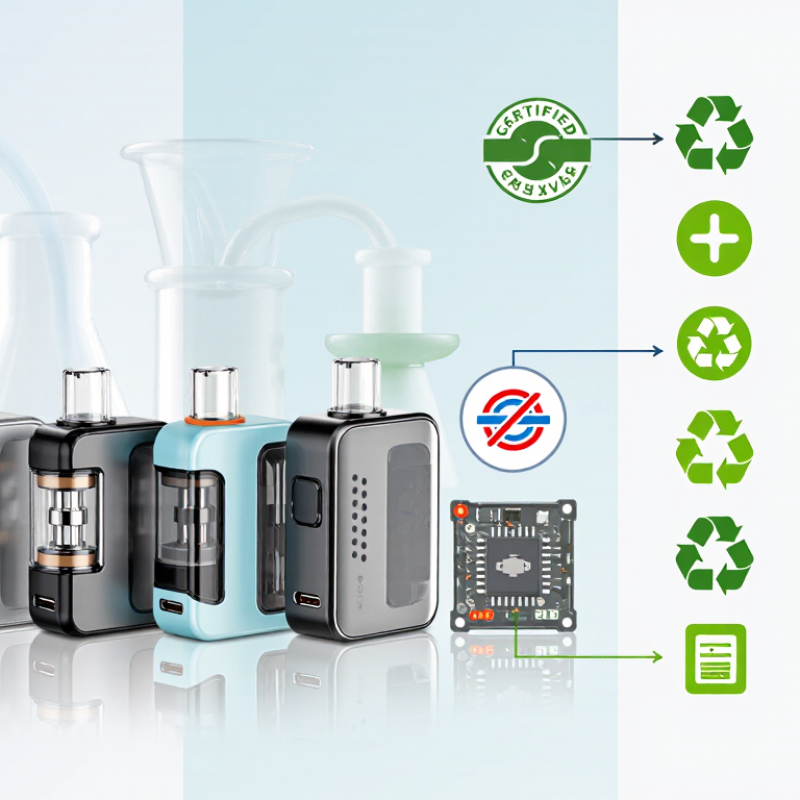
In 2026, vape device trends are moving toward practical, regulated, and lower-waste designs. Compact rechargeable models may remain popular, especially those with replaceable components and clear battery indicators. Consumers also expect smoother airflow control, stronger leak resistance, and more comfortable mouthpieces. Small details matter. A device that fits securely in a pocket can outperform a visually impressive model.
Traceability is becoming a key sourcing requirement. Buyers should review manufacturing records, material specifications, safety testing, and age-control features before placing an order. In regulated markets, child-resistant packaging and accurate product information are essential. Some connected devices may offer usage tracking or diagnostic alerts, but data privacy must be examined carefully. A smart feature is not automatically a useful feature.
Tips: Compare supplier test reports with independent laboratory results. Request samples from different production batches. Check charging performance, heat consistency, and leakage after repeated use. Ask how damaged batteries are handled. Early forecasts are not always right. A sleek prototype may fail during daily testing, while a simpler design may prove more reliable. Keep notes from distributors and adult consumers, but treat every opinion as limited evidence. Local laws can also change quickly, so confirm compliance before sourcing or selling any device.
How to Source the Latest Vape Device Trends in 2026?
Reliable trend research begins with transparent data, not social media excitement. Grand View Research valued the global e-cigarette market at about $26 billion in 2022. It also projected strong growth through 2030. Forecasts can change quickly, though. Treat them as direction, not proof.
For current information, compare government health reports, customs statistics, retailer sell-through data, and audited market studies. Euromonitor’s 2025 nicotine research can help track category movement and adult consumer preferences. The World Health Organization also provides updates on regulatory changes and product concerns across markets. Read the methodology carefully. Some reports measure shipments, while others measure retail sales. Mixing them may create a false trend. I have found that product launches often look larger online than they appear in verified sales data. That gap deserves attention.
Tips: Build a monthly source sheet. Record publication dates, sample sizes, regions, and forecast periods. Check at least three independent sources before calling a trend “current.” Prioritize legal, adult-only markets and exclude restricted products or claims. Search technical data on battery safety, materials, and emissions testing. Small details matter. Also, keep a “confidence” column. Some findings will remain uncertain, and pretending otherwise weakens professional judgment.
Sourcing current vape devices requires more than tracking sleek shapes or larger screens. Evaluate each model through documented safety evidence and real user needs. Battery protection matters. Look for overcharge, overheating, and short-circuit controls. Check charging-port durability and clear operating warnings. A device should feel stable in the hand, with no loose parts or sharp edges.
Ask suppliers for independent laboratory reports, material disclosures, and traceable production records. Confirm compliance with the rules in every intended market. Child-resistant packaging and responsible labeling should be verified before any commercial decision. Review quality-control procedures, not only product samples. A polished sample can hide inconsistent factory performance. Certified testing partners and regulatory specialists can strengthen this assessment.
User demand is becoming more practical in 2026. Adult consumers often value reliable battery life, simple controls, adjustable airflow, and lower waste. Refillable designs may attract users who want longer device service, where legally permitted. Gather evidence from retailer interviews, return rates, support requests, and age-verified market research. Do not rely on social media excitement alone.
I once treated high engagement as proof of demand, and the forecast failed. That mistake still matters. Trends change quickly, while safety documentation should remain consistent.
Sourcing the latest vape device trends in 2026 requires more than browsing product catalogs. A supplier should provide a registered business address, traceable manufacturing records, and clear quality procedures. Request recent samples before placing a large order. Inspect the device, packaging, charging port, airflow, and instruction sheet. Small details matter.
Ask for independent laboratory reports linked to specific batch numbers. Do not rely on polished screenshots or vague “safe” language. Product claims should match test evidence, technical files, and local advertising rules.
Claims about health benefits, reduced risk, or performance deserve careful scrutiny. They may be unsupported or restricted. Check materials, battery protection, emissions data, and ingredient disclosures where applicable. Keep every document in a supplier file.
Regulations differ across markets. Confirm age-gating, labeling, recycling duties, import requirements, and permitted product features with qualified local counsel or an official authority. A compliant device in one region may fail another market’s rules. That mistake can be expensive. I would also inspect recall history and complaint records, not just sales figures. Trends change quickly, while compliance evidence takes time. My process is not perfect; supplier documents can become outdated, and test results may not cover every production change. Set review dates, verify new batches, and record unresolved questions before approval.
Sourcing current vape-device trends in 2026 requires more than scanning product launches. Compare findings from trade reports, retailer data, user reviews, and regulatory notices. Look for repeated evidence across independent sources. A trend becomes useful when it solves a clear adult consumer need, such as portability, battery visibility, or easier maintenance. Record the release date, market, device type, and source quality. Separate measured performance from promotional claims. This step is slower, but it prevents weak assumptions. Some data will conflict. That is normal, and worth investigating.
Tips: Build a comparison sheet with columns for safety features, charging behavior, materials, refill design, repairability, price, and regional compliance. Give each source a confidence score. Test samples under consistent conditions, including pocket carry, repeated charging, and cleaning. Do not treat one enthusiastic review as proof. Keep notes on failures too.
To select the most relevant trend, score each finding against your audience, sales channel, and legal market. Prioritize features supported by technical documentation and transparent testing. Check electrical protections, leak resistance, labeling, age controls, and disposal guidance. Avoid features that increase complexity without a clear benefit. I have found that familiar designs often outperform flashy concepts when reliability matters. Still, convenience can hide environmental costs. A device may feel efficient while creating difficult waste. Recheck conclusions after 30 days, because early interest does not always become lasting demand.
Look for overcharge, overheating, and short-circuit protection. Check the charging port, warnings, and physical stability. Loose parts matter.
Request independent laboratory reports, material disclosures, production records, and quality-control procedures. Reports should match specific batch numbers.
Verify the business address, manufacturing history, recent samples, complaint records, and recall history. Documents can become outdated.
Examine the battery area, airflow, packaging, labels, instructions, and charging connection. Test repeated charging and pocket carry.
Compare every claim with test evidence and technical files. Be careful with health, reduced-risk, or performance statements.
Adult users may prefer reliable battery life, simple controls, adjustable airflow, and easier maintenance. Waste reduction also matters.
Review retailer interviews, return rates, support requests, and age-verified research. Social media excitement alone is weak evidence.
Use a comparison sheet covering safety, charging, materials, refill design, repairability, price, and regional compliance. Record source confidence.
Confirm age controls, labeling, recycling duties, import rules, and permitted features with qualified local counsel or official authorities.
Recheck conclusions after 30 days and review new batches. Early interest may fade, and one test cannot prove everything.
In 2026, understanding what are the latest trends in vape devices requires a careful review of product design, technology, safety, and consumer needs. Emerging directions may include more compact formats, improved battery efficiency, clearer usage controls, leak-resistant construction, recyclable materials, and features that support responsible use. To identify meaningful developments, researchers should consult reliable market reports, technical publications, public regulatory resources, and verified industry data rather than relying on unconfirmed online claims.
A strong evaluation should compare device features, material quality, safety testing, labeling, user preferences, and applicable regulatory requirements. Suppliers should be checked through business records, certifications, transparent documentation, and consistent product information. Claims about performance, ingredients, durability, or environmental benefits should be independently verified whenever possible. By comparing evidence from multiple sources, buyers and researchers can distinguish temporary attention from genuine market progress and select the most relevant, safety-focused, and regulation-compliant device trends.

Luvn Vape