Understanding how vape devices are made begins with the parts a factory must control: a battery, circuit board, heating element, airflow path, and liquid-contact materials. The process is more exacting than assembling a small plastic shell. A misplaced seal can cause a leak. A weak electrical connection can lead to inconsistent performance.
The question “how are vape devices manufactured” therefore involves design, material selection, component production, assembly, and quality checks. Manufacturers typically inspect incoming parts, verify dimensions, test electrical connections, and check finished units for leaks and airflow consistency. The precise controls vary by device and facility. Buyers comparing top vape device manufacturers should ask how suppliers document these checks, trace components, and manage defects. A polished product photo cannot answer those questions.
Public-health researcher Dr. Neal L. Benowitz has cautioned, “E-cigarettes are not harmless, but they are likely to be less harmful than conventional cigarettes.” This statement concerns health risk, not manufacturing quality; it should not be treated as an endorsement of any device. That distinction matters. Production records and repeatable tests can support reliability, but they cannot prove a product is risk-free. And a factory’s claims deserve scrutiny. This guide examines common manufacturing stages, quality controls, and practical questions to raise with suppliers, while recognizing that public information about individual factories can be incomplete.
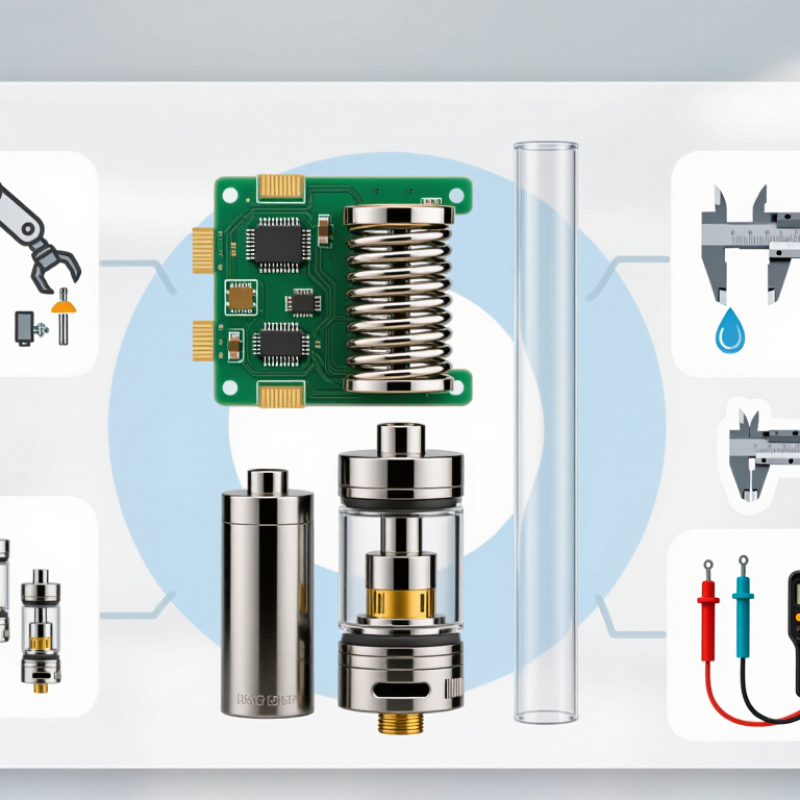
Vape devices combine a battery, control board, heating coil, wick, reservoir, and mouthpiece. Each part has a distinct job. The battery supplies power; the control board regulates delivery and may monitor activation. The coil converts electrical energy into heat, while the wick draws liquid toward it. Air channels guide the resulting aerosol to the mouthpiece. Small parts matter.
The National Academies’ 2018 report, Public Health Consequences of E-Cigarettes, reviewed more than 800 scientific studies. It describes how device characteristics and operating conditions can affect aerosol emissions, so components cannot be assessed in isolation. Coil resistance, power settings, airflow, and wick saturation all influence heating. A dry wick, for example, may let the coil run hotter than intended. That is easy to overlook.
Materials and assembly also matter. Poor electrical connections can cause inconsistent operation, while uneven seals may allow leaks into the device body. Manufacturers typically check battery performance, electrical continuity, airflow, and leakage during quality control. These checks are useful, but they cannot explain every difference in real-world use. A clean component diagram is helpful; it is also incomplete.
Vape device design starts with a clear engineering brief: size, airflow, power needs, and safe handling. Teams use computer-aided design to shape the housing, place the battery, and route electrical connections. They also consider heat near the aerosol-producing component. A few millimeters matter. A cramped layout can complicate cooling and assembly. Prototypes help engineers check fit, airflow, and operating temperature before production. Not every early model works as expected; that is part of the process.
Electrical design includes controls for charging, temperature, and battery performance. Engineers test components under repeated use and inspect how the device behaves if a part fails. The U.S. Fire Administration’s 2017 report, Electronic Cigarette Fires and Explosions, documented 195 incidents from 2009 through 2016. The report highlights why battery placement, charging safeguards, and clear operating instructions deserve careful attention. It does not describe every device or establish a current incident rate. Bench testing matters, but real-world conditions are harder to reproduce.
Tips: Review test methods, not just product claims. Check whether design documents describe battery protection, temperature testing, and quality checks. Clear records build trust. They also reveal gaps engineers may need to revisit.
Vape-device components are made through several controlled processes, and each material serves a different purpose. The outer housing is commonly formed from molded plastic or shaped metal. Technicians inspect edges, seams, and openings because small defects can affect assembly. Small details matter. A clean-looking shell, however, does not prove that the internal parts meet quality requirements.
Electronic components are assembled on circuit boards using automated placement and soldering equipment. Workers or inspection systems check solder joints and confirm that switches and sensors respond as intended. Rechargeable cells require careful handling, insulation, and electrical testing. Testing helps identify faults, but it cannot eliminate every possible failure. That limitation deserves ongoing review, not a confident shortcut.
Heating assemblies may combine a metal element, a support structure, and absorbent material. Manufacturers check dimensions and material consistency, then inspect assembled units for leaks, poor connections, or visible damage. These checks matter because tiny gaps can lead to inconsistent operation. Not every part fits perfectly. A responsible production process records defects, reviews repeated problems, and updates inspection methods; otherwise, a familiar flaw can slip through another production run.
| Top Vape Device Manufacturers: How Are Vape Devices Made? — How Vape Device Components Are Manufactured | ||||
|---|---|---|---|---|
| Manufacturing Stage | Component or Assembly | Common Materials or Process | Typical Quality Checks | Purpose |
| Product design and engineering | Device layout, airflow path, electrical system, and enclosure | Computer-aided design, engineering drawings, material specifications, and prototype evaluation | Dimensional review, design verification, and assessment against applicable product requirements | Defines how components fit and function before production begins. |
| Housing production | Outer shell, mouthpiece, and internal supports | Injection-molded polymers or formed metal, depending on the device design | Visual inspection, dimensional measurement, and checks for cracks, flash, or sharp edges | Protects internal parts and provides the device’s physical structure. |
| Battery and electrical assembly | Rechargeable cell, contacts, protection circuit, and charging interface | Battery cells and electronic components assembled using controlled joining and fastening methods | Polarity, electrical continuity, charging behavior, and protection-circuit function | Supplies and manages electrical power. Battery handling and testing require appropriate safety controls. |
| Control electronics production | Printed circuit board, sensors, switches, and control components | Surface-mount assembly, soldering, and firmware installation where applicable | Automated optical inspection, solder-joint inspection, and functional testing | Controls device operation and, in some designs, monitors operating conditions. |
| Heating element production | Coil or other resistive heating element | Resistive metal wire or a manufactured heating structure, selected for the device design | Resistance measurement, connection inspection, and verification of consistent heating behavior | Converts electrical energy into heat within the designated atomizer assembly. |
| Wick and liquid-contact parts | Wicking material and related supports | Porous materials such as cotton or engineered ceramic, depending on the product design | Material inspection, fit checks, and verification that the assembly is free of visible contamination | Moves e-liquid toward the heating element in designs that use a wick. |
| Cartridge or reservoir production | Tank, cartridge, seals, and liquid-contact channel | Molded components, compatible seals, and mechanical assembly | Fit, seal integrity, visual inspection, and leak testing where applicable | Contains e-liquid and connects it to the atomizer system. |
| Final device assembly | Housing, electronics, battery, atomizer, and cartridge or reservoir | Manual or automated assembly using fixtures and documented work instructions | Component presence, connector fit, exterior condition, and basic functional checks | Combines manufactured parts into a finished device. |
| End-of-line testing | Completed device | Electrical and mechanical test procedures appropriate to the device type | Activation, charging where applicable, airflow, leakage, and performance checks under defined test conditions | Identifies defects before devices are released for packaging. |
| Packaging and traceability | Finished device, instructions, and packaging | Protective packaging, product identification, and batch or lot records | Label and pack-count verification, packaging inspection, and record review | Protects the product during distribution and supports manufacturing traceability. |
Vape-device assembly starts with incoming checks on battery cells, circuit boards, metal housings, and seals. Technicians verify dimensions and inspect solder joints before installing the board and battery. Insulation sheets prevent contact with conductive parts. The heating element and liquid chamber are then fitted, with seals checked for alignment. A small gap can cause a leak. It happens.
Grand View Research estimated the global e-cigarette and vape market at US$28.17 billion in 2023 and projected 30.6% annual growth from 2024 to 2030. That scale makes repeatable checks important, but a large market does not guarantee quality. At the test station, workers may check airflow, electrical continuity, charging behavior, and liquid leakage. UL 8139 evaluates electrical, mechanical, and thermal hazards in electronic nicotine delivery systems. Results should be traceable to each production batch; missed defects can still slip through.
Tips: Look for documented test records, clear battery-insulation checks, and leak testing after assembly. Ask how failed units are separated and rechecked. Don’t rely on appearance alone. A neat casing can hide a weak solder joint.
Leading vape device manufacturers often begin with a defined engineering brief: target dimensions, battery capacity, airflow, and heating consistency. Product teams turn those requirements into prototypes, then check how each part fits under real handling conditions. A mouthpiece should sit securely; buttons should respond without sticking. Small details matter.
Production methods vary, but reliable facilities typically use controlled assembly steps and documented inspections. Workers or automated systems check battery connections, seals, and electrical output before units move to packaging. Samples may undergo repeated heating and cooling cycles to reveal weak joints or uneven performance. Testing takes time. It also cannot predict every failure, so manufacturers need clear procedures for recording defects and tracing affected batches.
Material selection shapes both durability and manufacturing consistency. Suppliers are assessed for stable specifications, while incoming parts are checked against drawings and tolerances. Clean work areas help limit dust around small air channels and electrical contacts. Quality teams may review assembly records, test results, and customer returns together, looking for recurring patterns rather than treating each complaint as isolated. Still, paperwork alone does not prove a device performs well. Hands-on checks remain important, and production teams should revisit their assumptions when field results differ from laboratory findings. That review can be inconvenient, but it is part of responsible manufacturing.
Housings are commonly made from molded plastic or shaped metal. Inspectors check edges, seams, and openings.
Automated equipment places and solders components. Workers or inspection systems examine solder joints and test switches and sensors.
Cells need insulation and electrical testing. Testing can reveal faults, but it cannot prevent every possible failure.
It may include a metal element, a support structure, and absorbent material. Dimensions and material consistency are checked.
Assemblers check seal alignment, airflow, electrical continuity, and liquid leakage. Small gaps matter.
Checks may cover airflow, charging behavior, electrical continuity, and leaks. A neat casing proves little.
Records linked to each production batch help teams review defects and repeated problems. Missed faults can still slip through.
No. A smooth shell can hide a weak solder joint or another internal defect. Looks can mislead.
This article explains how vape devices are developed, produced, and checked for consistent performance. It introduces key components, such as the power source, control circuitry, heating element, liquid reservoir, and mouthpiece, and describes the role each plays in the device. It then follows the design and engineering process, from defining product requirements and selecting suitable materials to creating prototypes and refining their structure, usability, and reliability. The overview also considers how are vape devices manufactured, covering the production of individual components and the care needed to meet design specifications.
The final sections describe assembly and testing, including inspections of component fit, electrical function, airflow, and overall device operation. They also outline how manufacturers may organize production through process controls, equipment selection, staff training, and quality checks. Together, these topics provide a clear, general introduction to the path from initial concept to a finished, tested device without focusing on any particular company.

Luvn Vape